- Full Stack Product
- In build, deployed
- Client work (private, commercial real estate)
Property intelligence for a commercial real estate brokerage
One system of record for a brokerage: every building, owner, lease and contact in one place, with the documents the firm sends generated from that record instead of retyped from the last deal.
a working system, deployed and demonstrated end to end. The client is not named and the screens below run on invented sample data, not the firm's records.
A look inside
These are not the client's screens, and they never will be. They are the system we built for them, rendered in its own stylesheet around a fictional building, fictional owners and fictional tenants. The interface is real. Everything it is showing is invented, and the client is not named anywhere in it.
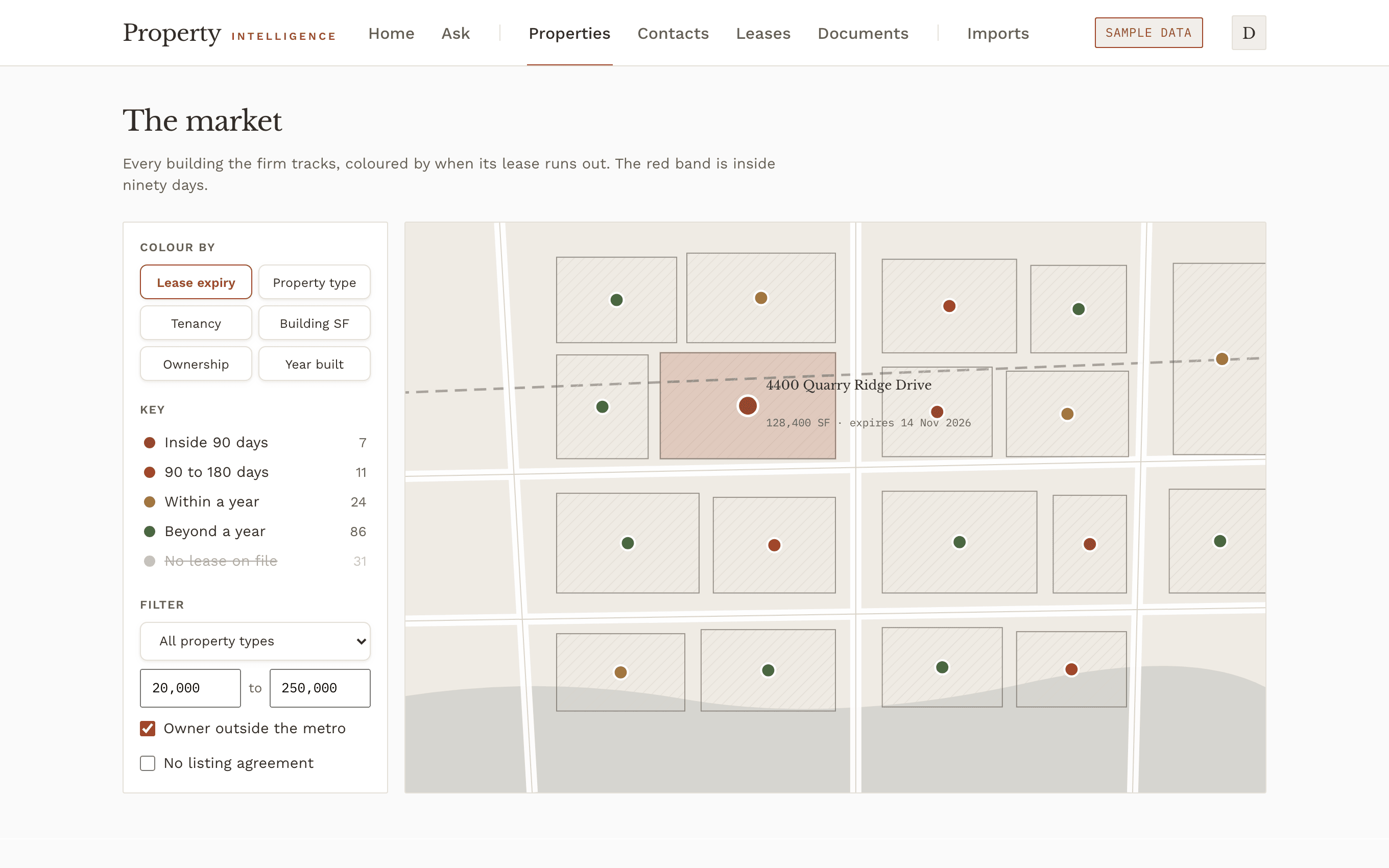
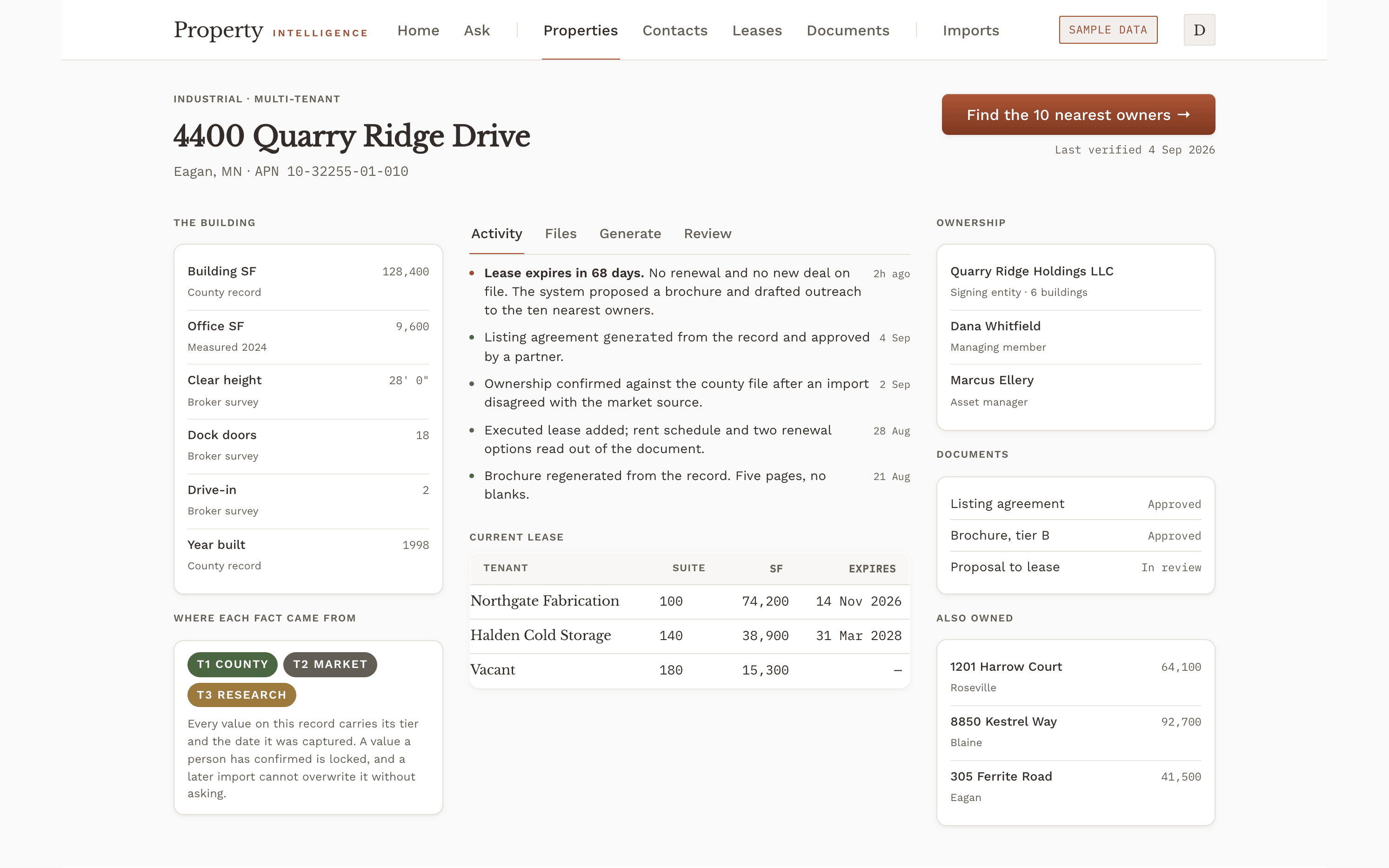
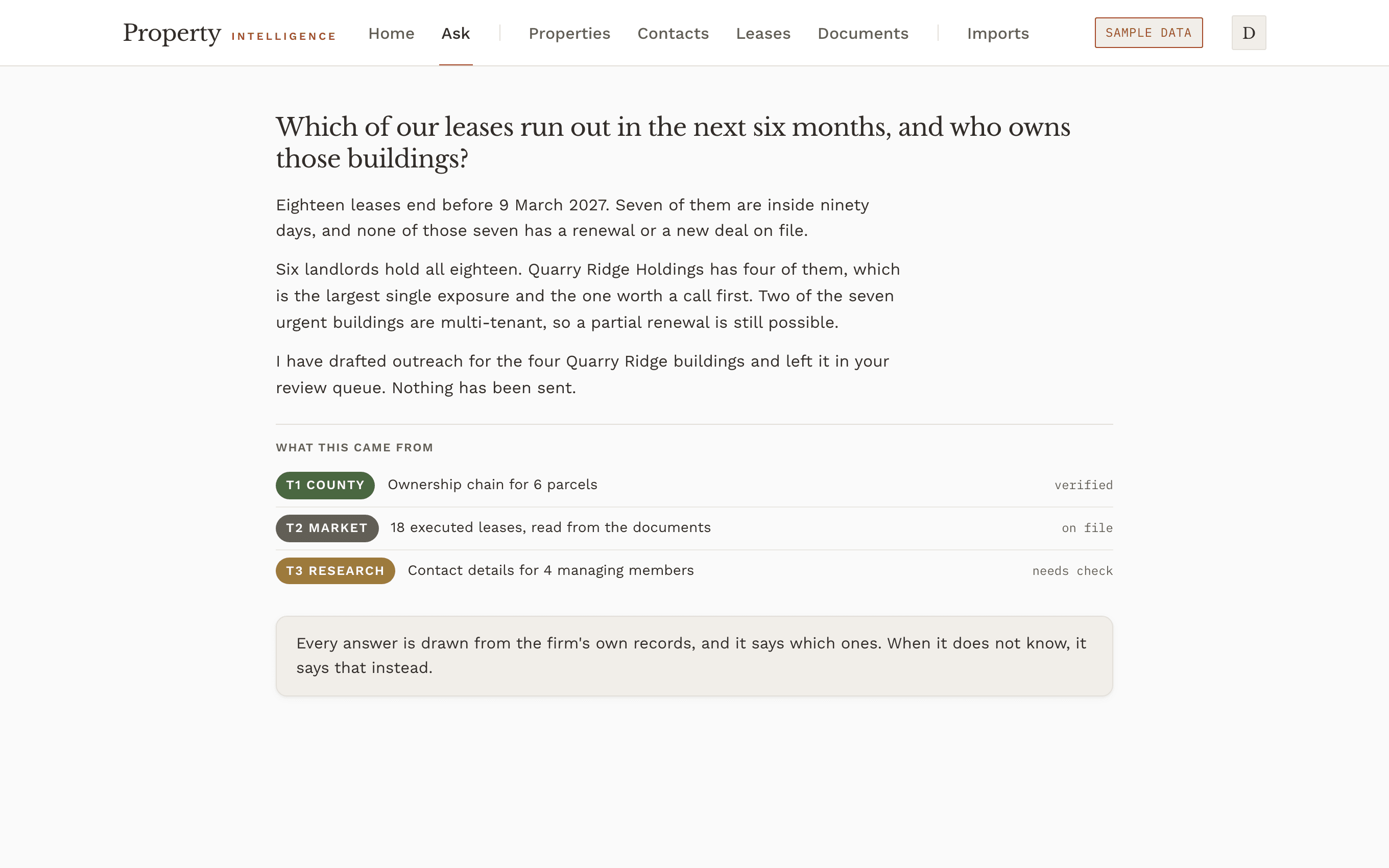
The market, coloured by when each lease runs out. The panel switches what the colour means: expiry, property type, tenancy, size, ownership.
1 of 5
The work
The problem
A brokerage runs on documents, and it makes each one by opening the most recent similar deal and editing it. That is slow, it falls on the person with the least time, and it goes wrong quietly: a letter of intent that still names the previous property, a proposal carrying dates from a prior year. Underneath sits a worse problem. The facts those documents depend on, who owns the building, how big it is, when the lease ends, live in several places that disagree, and the knowledge of which source to trust sits with one person rather than in the business.
What we built
A working system in four layers, each one earning the next. A register of buildings, owners, leases and people, where every value carries the source it came from and the date it was captured. A resolution step that puts two disagreeing sources side by side, asks a person to choose, and then locks that choice so a later import cannot quietly overwrite it. A document engine that generates the firm's real agreements, proposals and marketing brochures from the register, filling what it knows and leaving a labelled blank where it does not, then routing each one through review and partner approval. And a layer that watches the register for the thing nobody has time to watch: a lease running out with no deal behind it, which proposes the marketing piece and drafts the outreach to the neighbouring owners. Alongside it, a question box that answers in plain language from the firm's own records and names the sources it used.
The result
The system is built and deployed, and it has been demonstrated to the client running end to end: a document that used to be assembled by hand now comes out of the record with its blanks marked, and a person approves it before it goes anywhere. The engagement is live and the commercial terms are still being settled.
The systems inside
Delivered systems, connected the way they run.
Screenshots stay with the clients; the shape of the work does not.
- The register
- The human check
- The document engine
- The watch
The register
Buildings, owners, leases and people in one place, every value carrying its source and date.
The human check
Disagreeing sources go to a person, and the answer is locked against the next import.
The document engine
The firm's real agreements and brochures, generated from the record with blanks where it does not know.
The watch
A lease running out with no deal behind it proposes the marketing piece and drafts the outreach.
Evidence at a glance
- one register, every fact carrying its source
- documents generated from the record, not the last deal
- blanks where it does not know, never a guess
- a person approves before anything leaves
From the Systems Library
The reusable patterns behind work like this.
Documented systems from the library in the same territory, each one something we can bring into a project.
Agent pack
Document intake and extraction
Paperwork reads itself and files its own fields
Works with n8n, Anthropic API.
Built and running